What should the international community learn from American isolationism?
It has been said that America is experiencing an isolationist revival. The Trump administration certainly has turned its back on the international community:
- Initiating a global trade war
- Withdrawing from the Paris Agreement
- Withdrawing from the WHO
- Withdrawing from UNHRC
- Withdrawing from UNESCO
- Withdrawing from the INF Treaty
- Withdrawing from the Treaty on Open Skies
- Withdrawing from the JCPOA
- Withdrawing from the GMCT
- Cutting USAID funding
- Cutting PEPFAR funding
- Cutting UNRWA funding
- Cutting UNICEF funding
- Undermining the UN
- Undermining the EU
However, the overall foreign policy of the administration is not simply “isolationist”. If anything, they have followed a policy of interventionism, especially in the Western Hemisphere:
- Attempting to rename “Gulf of Mexico” to “Gulf of America”
- Proposing the annexation of Canada
- Proposing the annexation of Greenland
- Threatening military intervention in Panama
- Threatening military intervention in Venezuela
- Sanctioning the president of Colombia
- Pardoning the former president of Honduras
- Threatening to cut foreign aid if a Honduran presidential candidate is not elected
- Using sanctions, tariffs and visa revocations to prevent the prosecution of the president of Brazil
- Opening a $20b swap line with Argentina
- Imprisoning deportees in El Salvador
- Killing 105 alleged drug traffickers in the Caribbean and Pacific
- Seizing and blockading Venezuelan oil tankers
I would describe this as a shift towards a continental strategy, rather than simply “isolationism” or “interventionism”. This basically means America is becoming more like Russia: isolated from the international community while bullying its neighbours.
This has been difficult for people to process, especially because America found so much success as the foremost maritime power. It often seems that Trump’s foreign policy is unpredictable, contradictory or heavy-handed. However, this behaviour makes sense once you understand that Trump has a zero-sum worldview, admires continental powers, and prefers an aggressive negotiation style.
This zero-sum paranoia is what leads to the idea that trade deficits are betrayals, that alliances benefit small countries only at the expense of large countries, or that minor powers need to be controlled rather than uplifted. So while this new foreign policy may seem like sabotage by a foreign asset, the more simple explanation is that it’s a strategic misstep caused by ideology.
Many in the international community, especially Europeans, feel betrayed by America. At a time when we are most in need of international cooperation, the supposedly pro-Western president decides to take a critical view of the UN, the EU, NATO and Ukraine. The coalition of the willing followed America into the Middle East, but when Russia invades Europe: “It’s a war in another continent. We’ve got issues in our own hemisphere we need to be dealing with.”
Some internationalists are reacting pessimistically: that we can no longer trust the United States, and that we will need to become independent from this former ally. I find this to be equally isolationist. In the international order, we don’t cut ties. Russia is still in the UN. Hungary is still in the EU. The point of internationalism is that we use democracy, diplomacy, free trade and soft power to make it easy to be a good guy and difficult to be a bad guy. Of course it hurts when good guys turn bad, but you should be working with them, not ignoring the problem. What if Russia’s wartime economy starts to collapse? What if the pro-EU party wins the 2026 Hungarian election?
Conversely, some are reacting naively: that this populism thing is just a fad, and that we just need to wait until 2028 to get an internationalist president. This is similarly counterproductive. Autocratisation is a global trend — not just an American one.
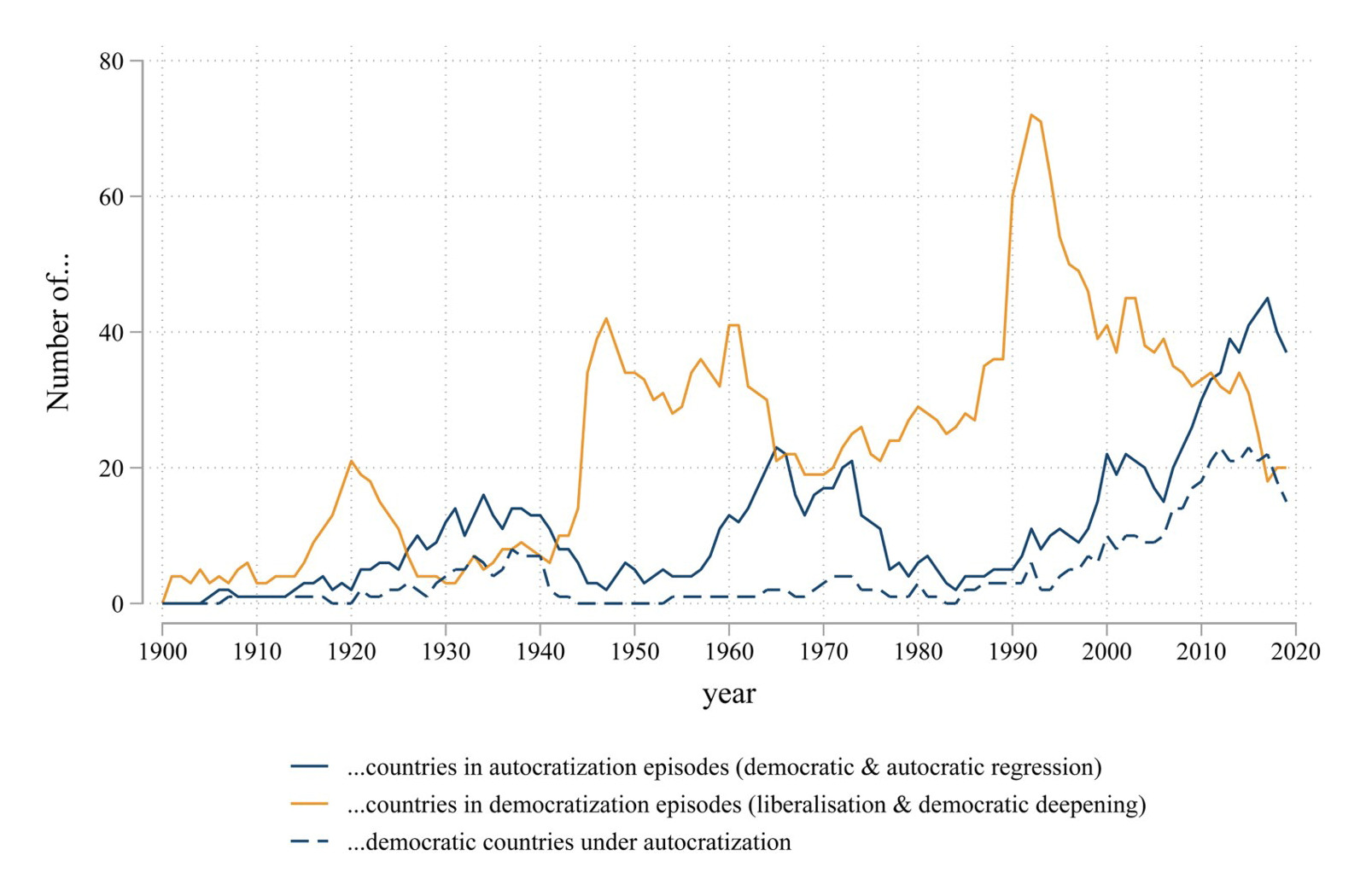
This trend will put international institutions to the test. We will have to sanction. We will have to spend on defence. We will have to form new alliances. Every parliament will have to struggle against populist movements.
Don’t give up.

